
The risk of unauthorized copying overseas
The recent case of Ladakh Pty Limited v Quick Fashion Pty Limited raises a number of issues that commonly face Australian fashion businesses, particularly with respect to the risks inherent in engaging offshore manufacturers. Unreported, [2012] FCA 389. In this case, fashion brand Ladakh appealed a decision by the Federal Magistrate to dismiss Ladakh’s claim of copyright infringement against Quick Fashion, an Australian-based fashion wholesaler.
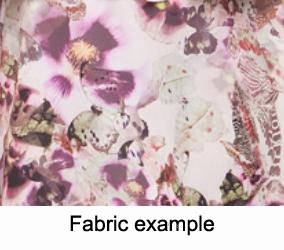 Ladakh claimed that Quick Fashion either infringed, or authorized infringement of, Ladakh’s artistic work—a butterfly pattern printed onto fabric—which Ladakh had used in garments sold under its label. Ladakh claimed that its designer had created the butterfly print and a CD containing the artistic work was then sent to an overseas factory to be printed onto fabric, which was then sewn into garments and sent back to Australia for sale by Ladakh.The garments were displayed for retail sale in Australia no earlier than 17 November 2009; it was at this time, Ladakh claimed, that Quick Fashion had access to the butterfly print fabric and copied it. On 30 December 2009, dresses and skirts made up from the copied butterfly print fabric were delivered to Quick Fashion in Australia, which then supplied these garments to Australian retailers. Quick Fashion claimed that it had ordered the garments from an overseas manufacturer after being provided with a sample of the butterfly fabric by the manufacturer in October 2009. The fabric sample had come from a third party fabric shop. Quick Fashion claimed that it had no knowledge of the alleged infringement until Ladakh sent its first of 2 letters of demand in January 2010.
 On appeal, there was no question that Ladakh’s artistic work had indeed been copied and made up into the garments sold by Quick fashion.The key issue in question was whether or not Quick Fashion was actually responsible for the copyright infringement, either directly or by authorizing this infringement.The Full Court dismissed the appeal, agreeing with the decision at first instance that there was not sufficient evidence to find Quick Fashion liable for the infringement. The Full Court considered the trial Magistrate’s finding that there were a number of other ways that the fabric design could have been copied, including through a leak of the design at any stage during its creation in Australia and its transfer overseas to Ladakh’s contracted textile and garment manufacturers. This case exemplifies the difficulties that Australian designers face in controlling unauthorized copying of their artistic works, not just when dealing with overseas contractors, but also when, for example, displaying their designs online for sale. Given the commercial imperatives of using the fastest, most economical manufacturers and suppliers possible—which tend to be those based overseas—and the pervasive use of the internet to advertise and sell Australian fashion and lifestyle products in the local and international market, designers’ artistic works are more visible, and so more likely to be copied by overseas entities. In this context, there is always a possibility that the copied artistic designs may be sold back into Australia through wholesalers, department stores, fashion chains and boutiques—whether as garments, textiles, home furnishings or other design objects. As seen in the Ladakh case, designers’ ability to enforce their copyright against a third party ‘innocent infringer’ can be extremely difficult. The possibility of innocent infringement is as much a concern for larger retailers and fashion chains as it is for the intellectual property owners. The third party innocent infringer faces the risk of becoming involved in ensuing legal action, whether or not they may ultimately be held liable. More importantly, even an innocent incidence of stocking infringing products may have the potential to damage the retailers’ own brand and jeopardize relationships (and possibly agreements) with suppliers. Fashion policing: Design protection in Australia (Part 3) (to be posted Friday Oct. 18) will discuss some of the strategies for trade mark protection.
This three part series was prepared by Emma Bekens, associate (emma.bekens@nortonrosefulbright.com) and Sophia Christou, Lawyer (sophia.christou@nortonrosefulbright.com) of Norton Rose Fulbright’s Australia Intellectual property group.